The state of Maine has temporarily shut down its data breach notification portal after receiving fraudulent submissions that impersonated major technology companies. This unexpected move comes in response to reports detailing the submission of misleading breach disclosures, which were published before they could be verified for authenticity. The actions taken by Maine underscore the gap in protective measures that can welcome misinformation into critical systems, ultimately affecting the trustworthiness of data security communications.
Fraudulent Submissions: A Closer Look
One notable instance involved a fabricated notice concerning Discord, a widely-used messaging platform boasting a global user base in the millions. The false notification claimed that a data breach had compromised 10 million accounts. It bore glaring red flags, such as an email address from Gmail—a clear red flag, considering legitimate communications from companies typically use custom domains. There was also a placeholder phone number included, which is a common tactic in fake notices to lend credibility while allowing the perpetrator to hide behind anonymity. The consumer notification date was set to January 1, 2000, a clear sign that attention to detail was lacking. This notification notably lacked a standard notification letter typically included in legitimate breach reports, further highlighting its suspicious nature. It's shocking how such blatant errors managed to bypass initial scrutiny.
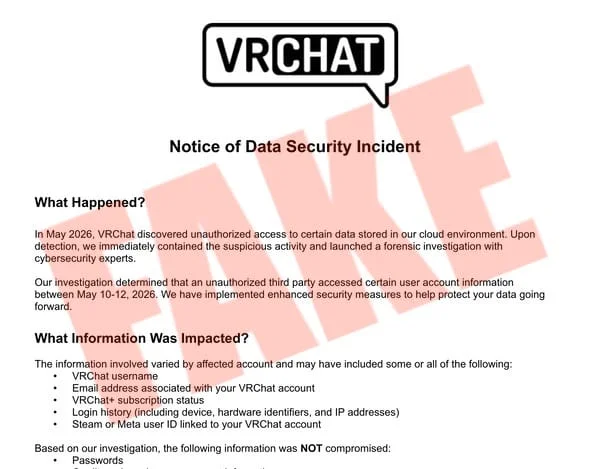
In contrast, a second fake notice related to VRChat, a social VR platform, was somewhat more plausible. It alleged that hackers accessed the company's cloud environment, exposing data for over 2.4 million users. Although the numbers might sound alarming, the fabricated report listed various types of compromised user information, including usernames, email addresses, subscription statuses, login histories, device identifiers, IP addresses, and links to Steam or Meta accounts. This type of specificity could easily mislead less-critical systems; the more details a fake submission contains, the more likely it is to go unflagged by casual reviewers.
The Response: Cross-Checking the Claims
However, the VRChat submission was flagged as deceitful when Charles Tupper, the company's Head of Community, confirmed to Bleeping Computer that neither the claimed employee nor the email used in the submission existed. He emphatically stated, "VRChat did not submit this Notice of Data Incident, and we have no reason to believe that our data or systems have been compromised." This type of authoritative confirmation is often what’s required to puncture the balloon of fake news swirling around data security, proving that vigilance is essential.
Further investigations revealed the Maine Attorney General's office had no advance knowledge of any legitimate breach reports involving either VRChat or Discord. This incident sheds light on the significant vulnerabilities in Maine's data breach reporting system, which lacks rigorous verification measures for submissions. That’s disturbing. Allowing anyone to submit fake notifications has serious implications; it not only has the potential to damage a company's reputation but also reinforces a culture of distrust for consumers who rely on data breach notifications to protect their information.
Immediate Actions Taken
As a precaution, Maine has suspended public access to the breach notification database while it reassesses its protocols. This drastic step reflects the urgency of the situation. With false reports now removed, the state must address how to prevent similar incidents in the future. The identity of the individual(s) behind these fraudulent submissions remains unknown. This raises concerns about additional fake reports going unnoticed before the portal was deactivated—an unsettling thought.
Looking Ahead: The Importance of Stronger Protocols
When the portal is reactivated, it will be essential for Maine to implement stronger verification protocols to safeguard against misuse. This isn’t just about tightening security; it’s about restoring consumer confidence. If you’re working in this space, you understand how critical it is for proper channels to be in place. Such systems are vital for ensuring that the public remains informed about actual data breaches, which, as we've seen, can have serious implications for user privacy and organizational integrity. Here’s the thing: without stringent vetting, any new system could invite chaos.
Implications and the Road Ahead
The repercussions extend beyond Maine's borders. Other states with similar systems might need to reassess their own procedures to avoid becoming targets of similar attacks. This situation could serve as a wake-up call for many authorities relying on outdated verification methods. Organizations must prioritize transparency and urgency when it comes to data breaches; these aren't just technical failures, they're trust failures. The future of data security may hinge on how well systems adapt to prevent such fraudulent activities.