A Closer Look at Upcoming Socket Technologies
The unveiling of AMD's SP7 socket alongside Intel’s massive LGA9324-1 at Computex heralds a new era for high-performance AI servers. The introduction of these colossal sockets is not merely a technical upgrade; it's a statement about the future capabilities of server architectures. With AMD pushing its EPYC Venice series and Intel premiering its Diamond Rapids, the stakes in server computing are set to skyrocket.
What distinguishes these new sockets isn’t just their size—though it’s certainly eye-catching. AMD's SP7 and Intel's LGA9324-1 represent a significant escalation in pin counts and overall processing power, tailored specifically for the demanding AI workloads that are becoming increasingly prevalent. As industries look to integrate advanced AI capabilities, these hardware advancements will play a pivotal role.
Despite the impressive technical specifications, there's a critical conversation to be had about the implications of these developments. For professionals in the tech field, particularly those involved in server design and AI integration, understanding the potential of these sockets is vital. It's not just about having the newest hardware; it's about aligning with a future where computational power is directly linked to operational success.
Moreover, the compatibility of these sockets with existing technologies raises questions. Will enterprises be ready to invest in infrastructure that fully exploits the capabilities of these new systems? This transition could be challenging, considering the extensive legacy systems many companies still utilize. Hence, while the specs sound groundbreaking, the practical implications may not be as clear-cut.
As we analyze the potential impact of AMD’s and Intel’s latest announcements, it becomes clear that these developments might be more significant than they initially appear. The underlying capabilities and design considerations could redefine how data centers operate in an AI-driven world. For those preparing to adapt to these changes, keeping a close eye on the evolution of server technology is imperative.
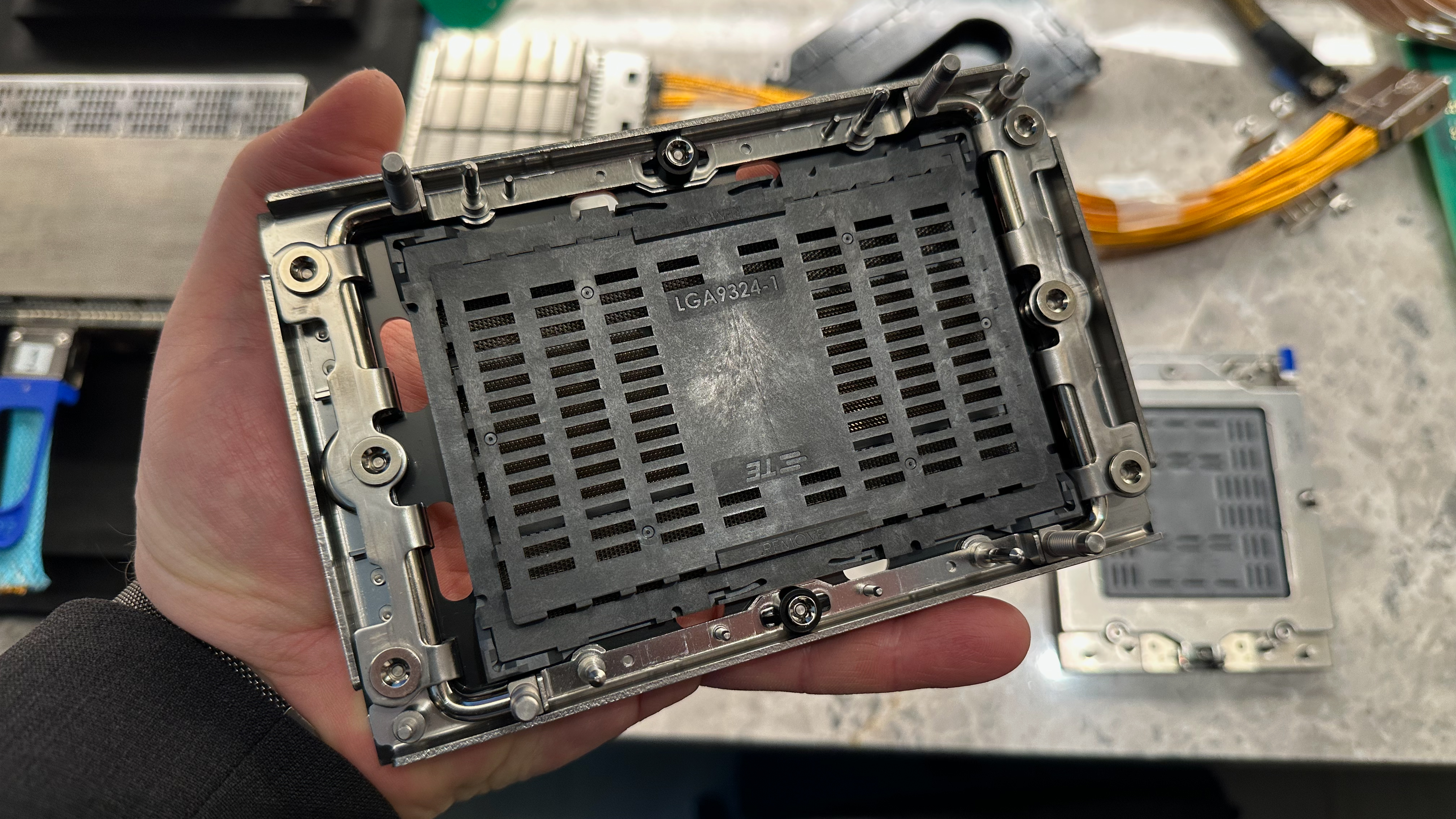
*Image credit: Tom's Hardware***The Rise of AI-Specific Socket Designs**
The introduction of AMD's SP7 socket and Intel's LGA 9324 is more than just a response to current trends; it's a clear indication of the industry's shift towards designs tailored specifically for AI applications. These are not merely updated versions of existing technologies but represent a strategic pivot in the chip-making realm aimed at meeting the insatiable demands of AI workloads.
At Computex, the massive SP7 socket was showcased alongside its counterpart from Intel. With 9,324 pins, the LGA 9324 isn't just a numeric increment; it reflects the fundamental changes in data processing needs—particularly in AI training and inference tasks. If you’re in tech development, get ready for increased complexity in architectures that accommodate these expansive pin counts.
However, from a market perspective, the launch raises questions about the transition period for existing hardware. AMD's SP7 socket will support their EPYC Venice processors, promising substantial processing power for AI-centric applications. Yet the transition to these powerful new sockets could leave legacy systems behind in what’s rapidly becoming a performance race.
**Performance Impressions and Real-World Implications**
The numbers emerging reveal impressive benchmarks, but we've got to unpack what that means for users. For instance, while AMD touts significant improvements over previous iterations, the adoption timeline for new architecture remains uncertain. It’s not entirely clear if tech enthusiasts and businesses will immediately pivot to adopt these systems, especially when existing setups may still perform adequately in many use cases.
Moreover, Intel’s strategy with the LGA 9324 echoes this sentiment. They're banking on industry partners to drive broader adoption, but the shift could take longer than anticipated. The challenge here is whether the promised performance enhancements are enticing enough to justify the investment required to upgrade systems.
**Navigating Compatibility Challenges**
Compatibility will inevitably be an issue as these new sockets roll out. The sheer size and pin count mean many systems could require comprehensive overhauls rather than simple CPU replacements. If you're working with a mixed architecture, the cost and complexity of transitioning could leave gaps that might hinder progress in AI integration.
This isn’t merely about performance boosts; it’s also about how businesses will manage their existing infrastructures while adapting to these new standards. Firms will need to weigh the balance of investing in new hardware against the ongoing support for legacy systems. It's essential to stay tuned to industry dialogues and community feedback on these socket launches as they could reshape AI deployment strategies in the enterprise landscape.
In essence, AMD and Intel's foray into bespoke socket designs for AI might signal the next evolutionary step in processing capability, but it comes with its own set of strategic considerations that go beyond just tech specs. If you're immersed in this space, consider how these changes might impact not just capabilities, but the broader ecosystem of software, hardware, and user experience.Emerging Server Sockets from AMD and Intel
We captured some intriguing visuals of the upcoming server sockets from both AMD and Intel at [Computex 2026](https://www.tomshardware.com/tag/computex). Both companies are gearing up to unveil their next-generation server designs, distinguished by entirely new sockets that promise enhanced performance, capabilities, and power management.
AMD is set to take the lead with its SP7 platform debuting in 2026, while Intel is preparing its behemoth 9324-pin socket to accompany the Xeon 'Diamond Rapids' lineup in 2027. Even though their architectures differ significantly, one characteristic they both possess is the impressive size of their CPU sockets and the accompanying coolers.
*(Image credit: Tom's Hardware)*
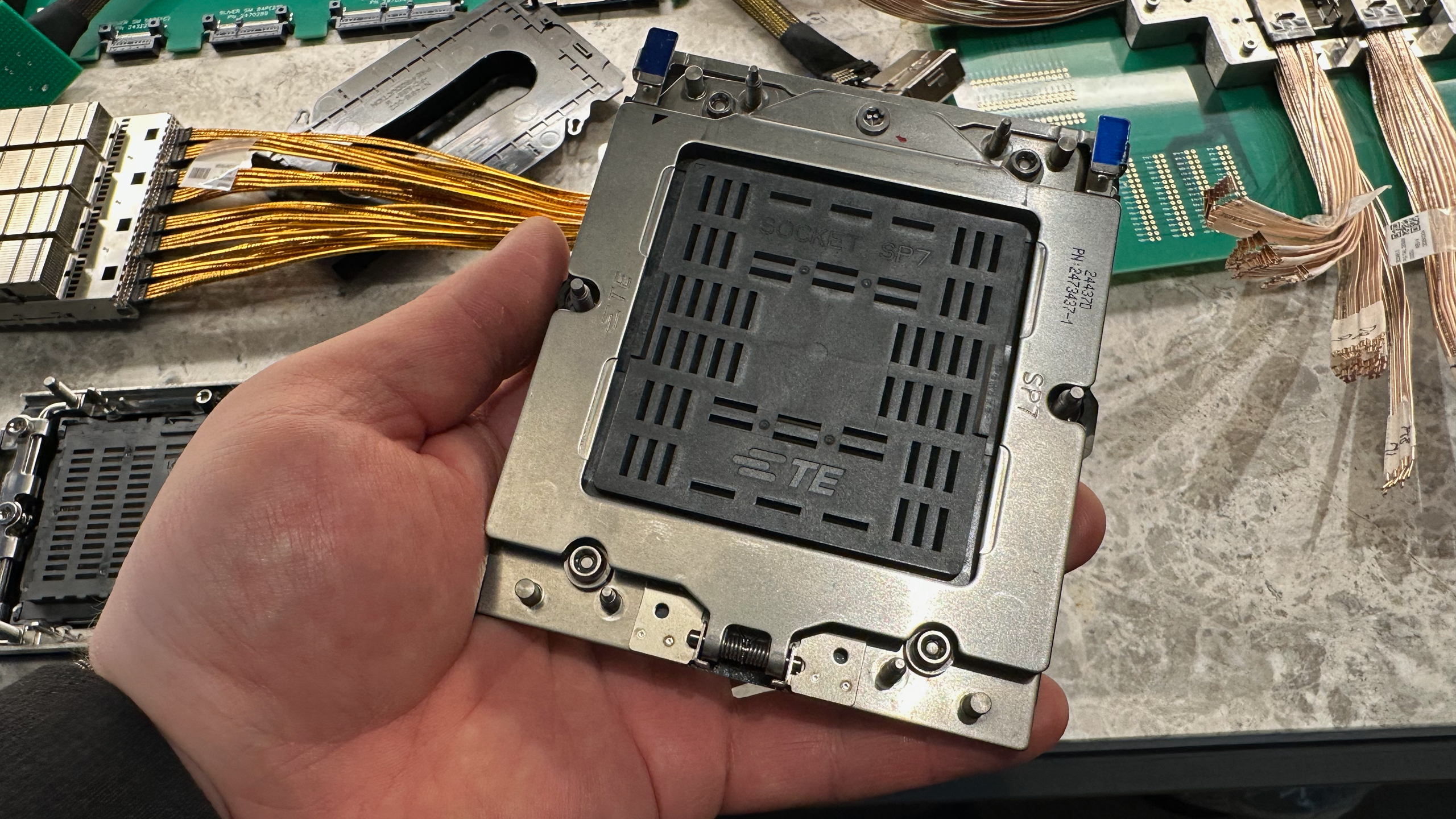
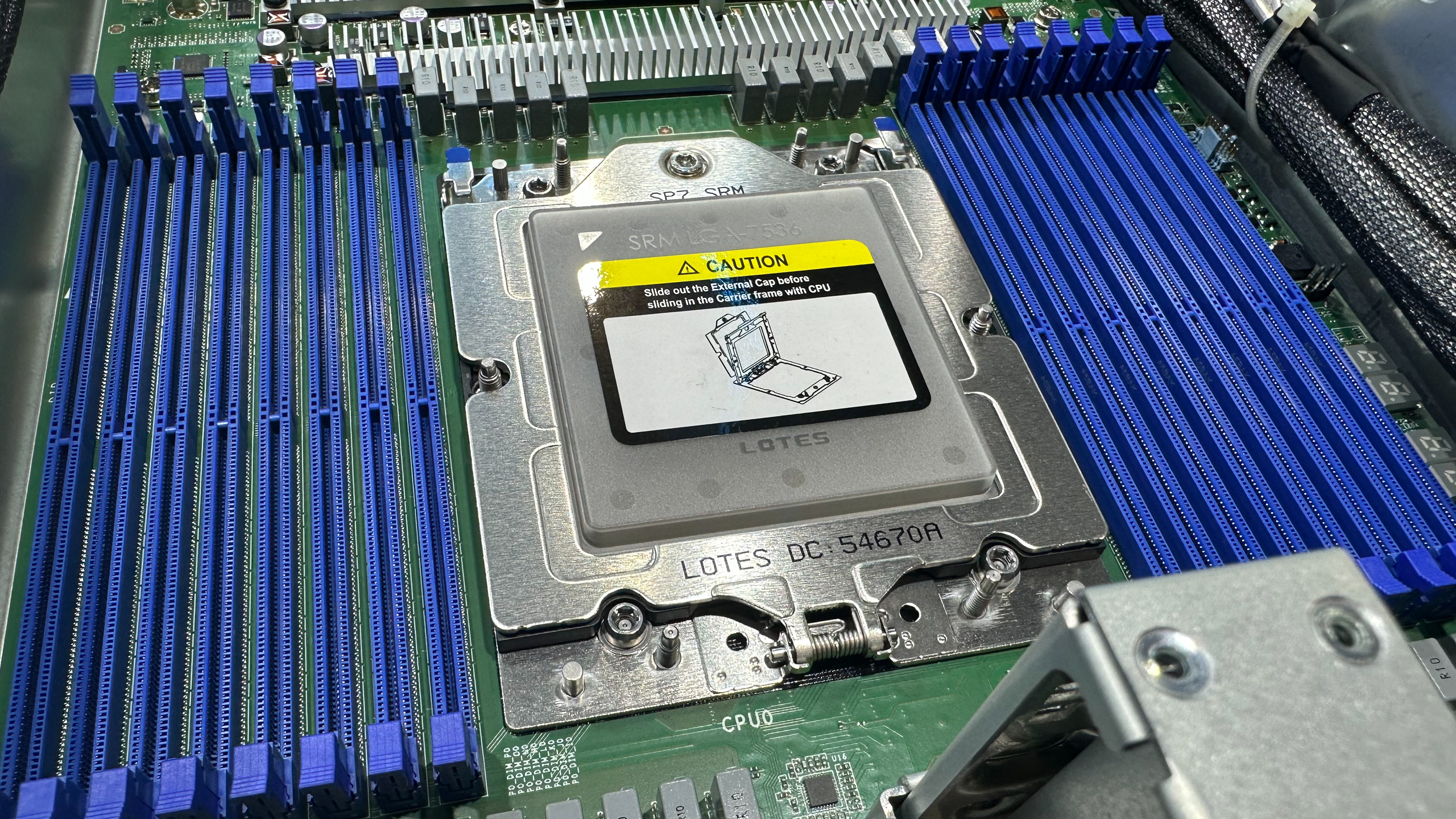
AMD’s SP7 is engineered to support its forthcoming 6th Generation EPYC ‘Venice’ processors, which are rumored to pack up to 256 cores. This socket's size is noteworthy; it’s designed to accommodate a staggering 16 DDR6 memory channels at 12.8 GT/s with capabilities for up to 96 PCIe 6.0 lanes, including an expansion for CXL protocol—a feature that's more reliant on processor specifications than the socket itself.
The SP7’s massive dimensions are a direct response to the demands of modern server architectures, as it must provide substantial support across multiplies of memory and PCIe channels. Its sheer size also allows for dual-socket server configurations, which could enable systems with up to 512 x86 cores when AMD's next-generation EPYC chips hit the market later this year.
*(Image credit: Tom's Hardware)*
On a different note, for less demanding applications, AMD is introducing the SP8 platform, which is optimized for a more modest core count and DDR5 channels. Interestingly, Auras is already developing water cooling solutions targeting the SP8 configurations, suggesting substantial power requirements even for this platform.
Now, pivoting to Intel’s offering, the 9324-pin socket dwarfs AMD’s SP7. It’s impressively oversized, measuring substantially longer than a typical hand span, and it’s tailored to host Intel's Xeon 'Diamond Rapids' CPUs, boasting up to 192 cores. This setup features a robust 16-channel DDR5 memory system and multiple PCIe Gen6 lanes, reflecting Intel's commitment to high-performance computing in the server sector.

*(Image credit: Tom's Hardware)*
What's fascinating is how these developments signal an arms race in the server market. While these new sockets are designed for superior throughput and power efficiency, the sheer scale of the physical infrastructure required for these systems raises questions about cooling challenges and energy consumption that both AMD and Intel will face. In this environment, the stakes couldn't be higher, as server performance continues to be paramount for data centers everywhere.Reflecting on Industry Shifts
As we look ahead, the tech arena is experiencing seismic shifts that could reshape its foundation. The blend of artificial intelligence and traditional hardware is particularly noteworthy. Companies are racing to integrate AI capabilities, not just in software but directly within computing architectures.
This convergence of AI and hardware is more than a trend; it’s the future. What does this mean for your work? If you’re in any tech-adjacent role, understanding the implications of AI on hardware design and functionality is essential. The days when hardware and software development were siloed are quickly fading, replaced by a paradigm where collaboration is key.
However, not everything is crystal clear. The exact trajectory of this integration varies by sector and application. It’s uncertain how every organization will harness these advancements. Some may thrive, others might struggle, and a few could become obsolete.
Looking further out, the potential for these technologies to create efficiencies is staggering. Imagine a world where devices anticipate our needs through predictive processing—this is within reach but must be approached with caution. Ethical considerations and security implications will undoubtedly accompany this evolution, and addressing them will be paramount.
Ultimately, navigating these changes will require adaptability. Those who can pivot and embrace the intertwined futures of hardware and AI will find themselves not just surviving but thriving in a landscape that’s shifting more rapidly than ever.